Going South: A Modern Script Font for Bold Branding
There's a specific kind of design challenge that calls for a typeface with personality without sacrificing professionalism. You need a font that feels personal, almost handwritten, but is clean and sophisticated enough for a commercial context. This is where a well-crafted modern script font like Going South becomes an invaluable asset. It’s not just about decorative swashes; it’s about injecting a human, contemporary voice into your visual communication.
The Anatomy of a Contemporary Script
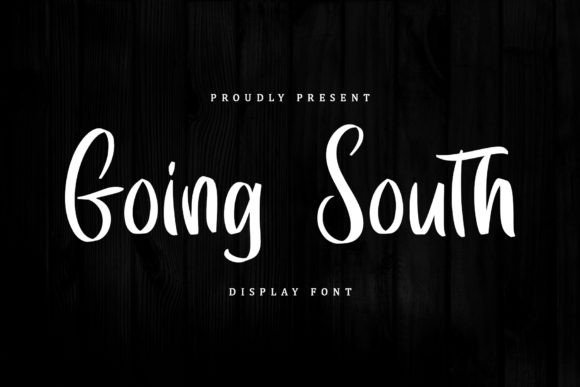
At first glance, Going South presents a familiar elegance, but a closer look reveals its modern DNA. Unlike traditional calligraphic scripts that can feel ornate or dated, this typeface is built on clean lines and a confident, bold stroke. Each letterform is carefully constructed to maintain a sense of fluidity while ensuring exceptional clarity. The connections between letters are thoughtfully designed, avoiding the awkward joins that can plague lesser script fonts. The overall effect is a graceful yet assertive presence—it feels personal and crafted, not messy or casual.
This balance is key. The font carries the warmth and approachability of a handwritten font but with the precision and consistency required for professional logo design and brand identity systems. It’s a premium font that understands its role: to add a touch of human sophistication without overwhelming the message. The personality is one of relaxed confidence, making it ideal for brands that want to appear both friendly and authoritative.
Strategic Applications: Where Going South Shines
Understanding a font's character is one thing; knowing where to deploy it is another. Going South excels in applications where you need to make a memorable, human connection. Its strengths lie in areas that benefit from a personal touch but still require a polished finish.
- Branding and Logo Design: This is a natural home for Going South. It can form the core of a wordmark for boutique businesses, lifestyle brands, creative agencies, or artisanal products. Think of a high-end bakery, a bespoke tailor, or a design studio. The font conveys a sense of care and craftsmanship. It pairs beautifully with a clean sans serif font for body text, creating a dynamic and professional font pairing.
- Editorial and Packaging Design: In editorial design, use it for pull quotes, chapter headings, or feature article titles in magazines and blogs to draw the reader's eye. For packaging design, it can elevate a product label, giving it an artisanal feel that stands out on the shelf. It’s perfect for product names, taglines, or special edition labels.
- Digital and Social Media: The font's clean construction translates well to digital screens. Use it for impactful web design headings, email newsletter headers, or standout social media graphics. On platforms like Instagram, it can make quote cards or promotional posts feel more personal and engaging, boosting audience connection.
- Invitations and Personal Projects: For wedding invitations, event programs, or personal stationery, Going South offers a sophisticated alternative to standard script fonts. It feels special and intentional, perfect for projects where you want to leave a lasting impression.
Making It Work: Practical Guidance for Designers and Creators
Choosing the right creative font is a strategic decision. Here’s how to approach integrating Going South into your workflow effectively.
First, evaluate the project fit. Ask yourself: does the brand or project require a voice that is personal, elegant, and modern? If the goal is ultra-clean, corporate minimalism, a serif font or geometric sans serif might be better. But if the brief calls for warmth, creativity, and a touch of artisanal quality, Going South is a strong contender. Review the font's full character set and any included styles (like alternates or ligatures) to ensure it has the versatility your project demands.
Next, test font pairings rigorously. A script font, no matter how well-designed, should rarely be used for long paragraphs of body copy. Its primary role is as a display font for headlines and accents. Pair it with a highly readable neutral font. For example, a geometric sans serif like Montserrat or a humanist sans serif like Open Sans can provide a stable, clean foundation that lets the script headlines pop. Test the pairing at various sizes to ensure visual harmony and clear visual hierarchy.
Finally, consider the practicalities. As a commercial font, verify that the licensing matches your project's scope, especially if it's for client work or commercial products. Check the font's readability at the sizes you plan to use it. While Going South is crafted for clarity, always test it in context—on a mockup of a business card, a website header, or a social media post—to ensure it performs as intended. The goal is to enhance your design assets, not create a bottleneck.
A Final Note on Consistency and Perception
The typefaces you choose are fundamental to your brand identity. They communicate subconsciously to your audience. Using a consistent, high-quality typeface like Going South across your touchpoints—from your website to your invoices to your social media—builds recognition and professionalism. It tells your audience that you pay attention to detail, that you value quality, and that there’s a thoughtful human behind the brand. In a crowded market, that kind of subtle, consistent messaging is what builds trust and fosters genuine engagement. It’s not just a font; it’s a tool for building a more resonant and recognizable presence.