Workaholic: The Creative Font with a Bold Handwritten Spirit
There’s a certain energy that comes from hand-drawn lettering. It feels immediate, personal, and full of character. But translating that energy into professional design work can be a challenge. You need consistency, scalability, and a polished look that raw sketches often lack. This is where a carefully crafted premium font like Workaholic steps in. It captures the soul of a quick, confident hand while delivering the reliability of a professional typeface. This isn't just another script font; it's a tool designed to inject personality into projects where a standard sans serif font or serif font might fall flat.
The Anatomy of a Confident Hand
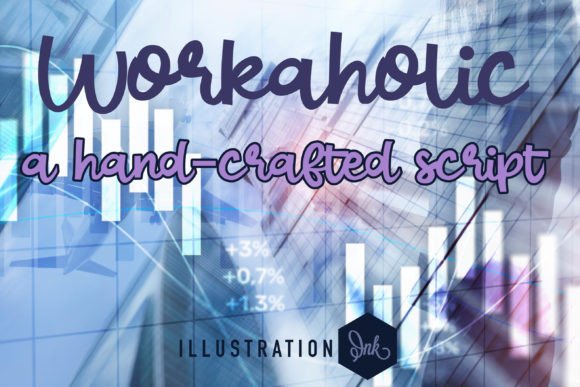
At first glance, Workaholic presents a fascinating contradiction. It has the flow and connectivity of a handwritten font, but its uppercase letters are surprisingly structured. They feature a print-like clarity with thick, chunky strokes that ground the design. This hybrid approach is its greatest strength. The lowercase maintains a fluid, cursive rhythm that feels authentic and approachable, while the capitals provide a strong, readable foundation. This balance prevents the text from becoming overwhelming or difficult to decipher, a common pitfall with overly whimsical scripts.
The overall personality is one of assured creativity. It’s not the shy, delicate script you might find on a wedding invitation. Instead, it carries a modern, slightly rugged vibe. Think of the chalkboard menu at a trendy coffee shop, the branding for a artisanal food product, or the title card for a lifestyle vlog. The chunky lettering ensures visibility and impact, making it a viable display font for headlines and logos where you need to make a statement quickly. The texture within the strokes gives it a tangible quality, as if it were drawn with a felt-tip marker or a brush pen, adding depth and interest to flat digital designs.
Strategic Applications: Where Workaholic Truly Shines
Understanding a font's character is one thing; knowing where to deploy it is another. Workaholic’s strength lies in its versatility across medium-impact applications. It excels in projects that require a human touch without sacrificing professionalism.
In brand identity, it’s a powerful choice for businesses that want to project authenticity and craftsmanship. Imagine it on the label of a small-batch hot sauce, the logo for a independent bookstore, or the header for a creative agency’s portfolio. It instantly communicates a brand story of passion and hands-on quality. For packaging design, the font’s tactile appearance can make a product feel more premium and personal, standing out on a crowded shelf.
For digital design and web design, it works beautifully for short, high-impact elements. Use it for call-to-action buttons, featured blog post titles, or promotional banners where you want to grab attention and convey a specific tone. In social media graphics, it’s a game-changer. The bold, readable style is perfect for Instagram quotes, YouTube thumbnails, or Pinterest pins that need to stop the scroll. It adds a layer of visual interest that generic fonts can’t match.
Beyond commercial use, it’s a fantastic creative font for personal projects. Think custom greeting cards, personalized stationery, or crafting projects like vinyl decals for mugs and tote bags. Its clarity ensures that even intricate designs remain legible, which is crucial for crafts and DIY endeavors. For editorial design, it can be used sparingly for pull quotes or section headers to break up long blocks of text and inject energy into a magazine layout or newsletter.
Making It Work: Practical Guidance for Designers and Creators
Choosing a font is a decision that affects the entire design ecosystem of a project. Here’s how to approach integrating Workaholic effectively.
Evaluating Project Fit: Ask yourself what emotion or message you need to convey. If the goal is to express creativity, warmth, individuality, or a handmade ethos, Workaholic is likely a strong candidate. If the project demands sterile, ultra-modern minimalism or traditional formal elegance, it may not be the right tool. It’s a specialist, not a generalist.
Testing Font Pairings: A display font like this rarely works well in isolation for body text. The key to a successful font pairing is contrast. Pair it with a clean, neutral sans serif font like Montserrat or Open Sans for body copy. This creates a clear visual hierarchy: the bold, expressive Workaholic for headlines and the simple, highly readable sans serif for paragraphs. Avoid pairing it with other ornate scripts or highly decorative fonts, as this will create visual chaos.
Readability Considerations: While designed for clarity, context is everything. Use it for short phrases, single words, or headlines. Avoid setting long sentences or paragraphs in it, as the connected script can cause eye strain over large blocks of text. Always test the font at the intended size and medium. A size that works on a large poster may become illegible when reduced for a mobile screen. Check the spacing—some adjustments to kerning or tracking might be needed to perfect the flow between letters.
Leveraging Included Styles: Check what the full font family includes. Many premium font packages offer alternates, swashes, or stylistic sets. These are invaluable for customization. An alternate ‘g’ or ‘s’ can change the entire feel of a word. Swashes can add a flourish to the end of a word in a logo, making it unique. Experiment with these features to avoid having your design look like it used a default template.
Commercial Licensing: This is a critical, often overlooked step. If you are using Workaholic for a client project, a product for sale (like a t-shirt or mug), or any commercial enterprise, you must ensure you have the correct commercial font license. Purchasing from a reputable foundry or marketplace guarantees you have the legal right to use the font in your final work. This protects you, your client, and supports the type designers who created the asset.
In the end, a font like Workaholic is more than just a collection of letters. It’s a design asset with a distinct voice. When used thoughtfully, it can elevate a project from generic to memorable, forging a stronger connection with your audience through the timeless appeal of a confident, human hand.